Reading Evolutionary TreesSpecimen entry
Plant Tree of Life: Land Plants' Closest Kin Are Pond Algae
- Published
- Last substantive revision
Spec card
- Clade
- Green plants (Viridiplantae), focusing on land plants (Embryophyta)Source: One Thousand Plant Transcriptomes Initiative 2019
- Representative species
- Green algae: Acetabularia; conjugating algae: Closterium; liverworts: Marchantia polymorpha; mosses: Polytrichum commune; hornworts: Anthoceros fusiformis; lycophytes: Lycopodium clavatum; ferns: Osmunda regalis; gymnosperms: Ginkgo biloba; flowering plants: Amborella trichopodaSource: WCVP (Kew) v16; World Flora Online Plant List 2026-06; algal genera: Acetabularia from One Thousand Plant Transcriptomes Initiative 2019, Closterium from Open Tree Taxonomy 3.7 (draft 3)
- Approximate number of species
- ca 374,000 described plant species, ca 308,312 of them vascular plants (2016 count); 450,000 to 500,000 green plants (2019 estimate)Source: Christenhusz & Byng 2016 (abstract); One Thousand Plant Transcriptomes Initiative 2019
- Key features
- Land plants: an embryo that develops inside the parent and is fed by it; vascular plants: vascular tissue; seed plants: ovules and seeds; flowering plants: carpel, double fertilisation and endospermSource: One Thousand Plant Transcriptomes Initiative 2019; terms checked in Jackson 1928, A Glossary of Botanic Terms
- Tree type
- phylogenetic hypothesisSource: One Thousand Plant Transcriptomes Initiative 2019; Open Tree of Life synthesis 16.1
- Place on the tree
- Root: the ancestor of the green plants. Land plants form one branch whose sister group is the conjugating algae. Unresolved: the split with Coleochaete, and the order of magnoliids, monocots and eudicots. Disputed: where hornworts join and where gnetophytes sit. Data retrieved 2026-10-21Source: One Thousand Plant Transcriptomes Initiative 2019; Puttick et al. 2018 (abstract); APweb v14; Open Tree of Life synthesis 16.1, doi:10.5281/zenodo.3937741
Download this card as CSV plant-tree-of-life-spec-card.csv data: One Thousand Plant Transcriptomes Initiative 2019, Nature 574: 679 (CC BY 4.0), retrieved 2026-10-21; Christenhusz & Byng 2016, Phytotaxa 261: 201 (abstract), retrieved 2026-10-21; Puttick et al. 2018, Current Biology 28: 733 (abstract), retrieved 2026-10-21; APweb version 14 (P. F. Stevens), relationships summarised, retrieved 2026-10-21; Open Tree of Life synthetic tree v16.1 (CC0), https://doi.org/10.5281/zenodo.3937741, with Open Tree Taxonomy 3.7 (draft 3) (CC0), https://doi.org/10.5281/zenodo.3937750, retrieved 2026-10-21; WCVP (Kew), CC BY 3.0, doi:10.34885/egs6-cp24, retrieved 2026-10-21; World Flora Online Plant List 2026-06 (CC0), retrieved 2026-10-21; Jackson 1928, A Glossary of Botanic Terms, 4th edition (public domain), retrieved 2026-10-21
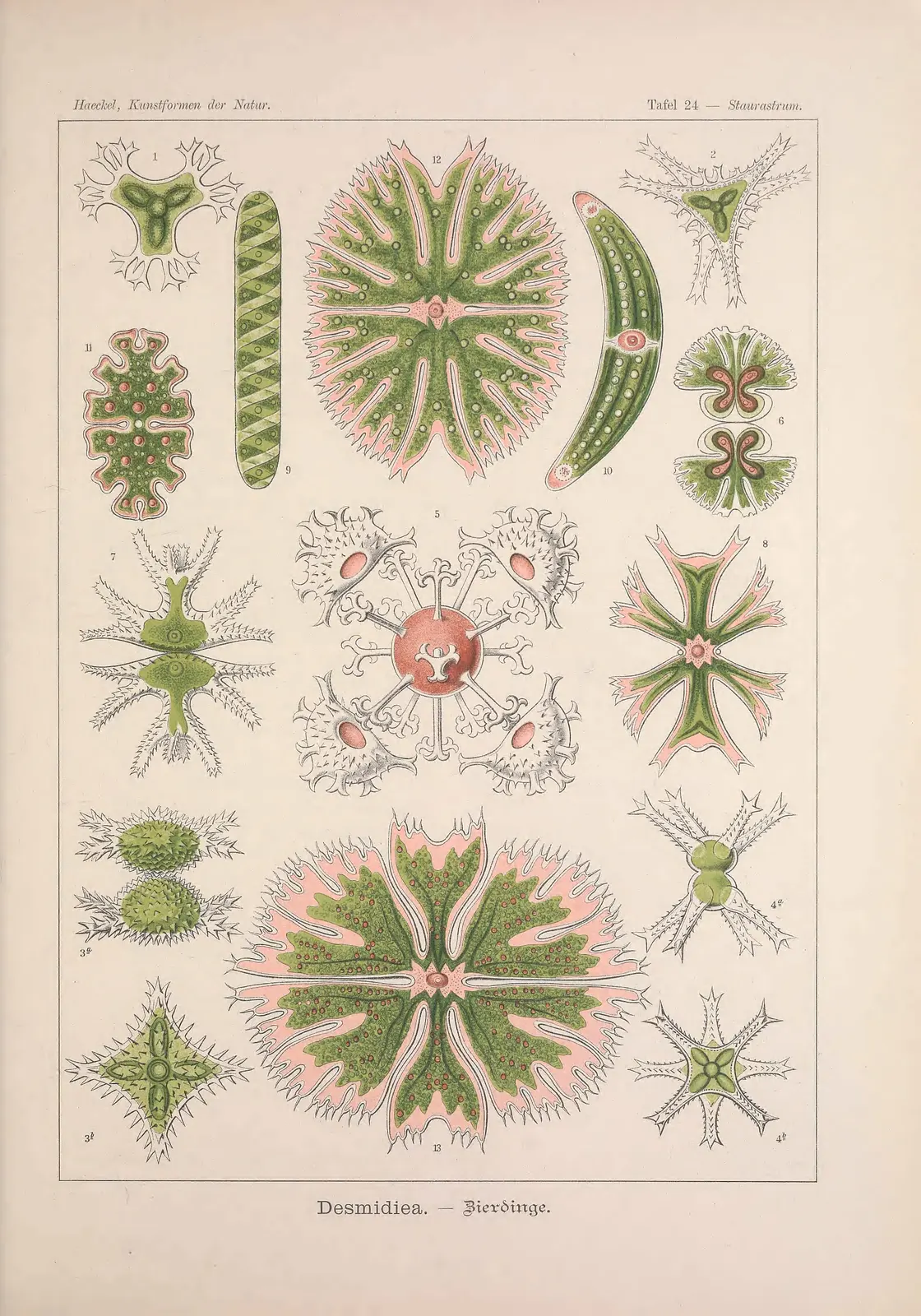
Desmids, microscopic algae of the conjugating group, drawn on plate 24 of Ernst Haeckel's "Kunstformen der Natur", published between 1899 and 1904.
Credit and licence
"Kunstformen der Natur (Tafel 24) BHL47388087" by Ernst Haeckel (Biodiversity Heritage Library) — https://commons.wikimedia.org/wiki/File:Kunstformen_der_Natur_(Tafel_24)_BHL47388087.jpg — Public domain (Ernst Haeckel d. 1919; Adolf Giltsch, the lithographer who turned many of Haeckel's drawings for the book into prints, d. 1911 (no lithographer signature is visible on this plate); published in "Kunstformen der Natur" between 1899 and 1904; US: published before 1931; EU: more than 70 years after both deaths; the Biodiversity Heritage Library scan is a faithful reproduction)
The closest living relatives of mosses, ferns and roses are algae of fresh water, many of them microscopic. On the plant tree of life below, redrawn from a 2019 study by the One Thousand Plant Transcriptomes Initiative (1KP), all land plants form a single branch. Its sister branch is the conjugating algae, Zygnematophyceae, which are common in nearly all freshwater habitats. A 2018 study by Mark Puttick and colleagues found the same pairing.
The tree is a phylogenetic hypothesis: a diagram of shared ancestry, estimated from gene sequences, with a living group at every tip. It starts from the ancestor of all green plants, and Fig. 1 shows 18 of its branches. A 2016 count by Maarten Christenhusz and James Byng found about 374,000 known plant species, about 308,312 of them vascular plants. The 1KP paper puts green plants as a whole at 450,000 to 500,000 species.
The whole tree on one page
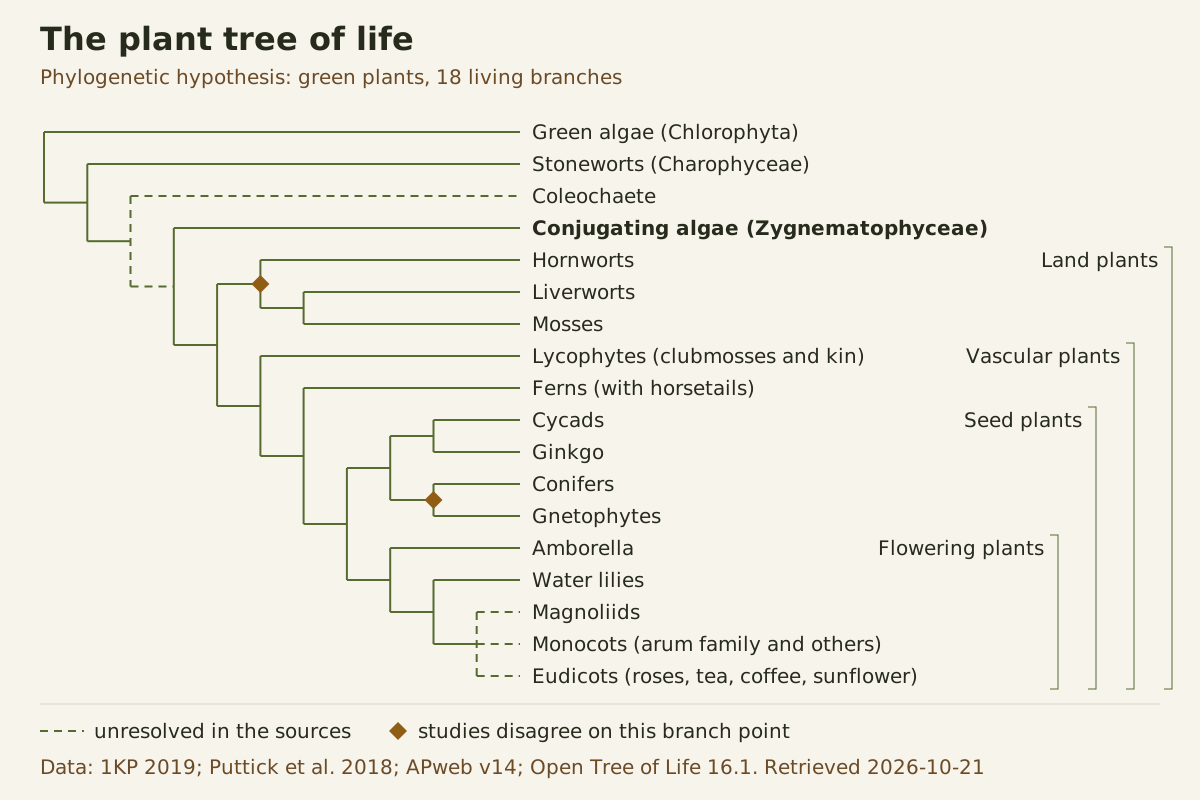
Fig. 1. A phylogenetic hypothesis for 18 living branches of green plants, drawn from this page's node table; dashed lines are unresolved, and diamonds mark disputed branch points.
"The plant tree of life: green plants as a phylogenetic hypothesis" by Botany for the Curious, https://botanyforthecurious.com/trees/plant-tree-of-life/, licensed under CC BY 4.0 (https://creativecommons.org/licenses/by/4.0/)data: One Thousand Plant Transcriptomes Initiative 2019, Nature 574: 679 (CC BY 4.0), retrieved 2026-10-21; Puttick et al. 2018, Current Biology 28: 733 (abstract), retrieved 2026-10-21; APweb version 14 (P. F. Stevens), relationships summarised, retrieved 2026-10-21; Open Tree of Life synthetic tree v16.1 (CC0), https://doi.org/10.5281/zenodo.3937741, with Open Tree Taxonomy 3.7 (draft 3) (CC0), https://doi.org/10.5281/zenodo.3937750, retrieved 2026-10-21; WCVP (Kew), CC BY 3.0, doi:10.34885/egs6-cp24, retrieved 2026-10-21; World Flora Online Plant List 2026-06 (CC0), retrieved 2026-10-21Read Fig. 1 from the left. Each branch point stands for a shared ancestor. A group is closer kin to the groups it meets at more recent branch points.
The first split separates the green algae of the Chlorophyta from a branch that holds the stoneworts, Coleochaete, the conjugating algae and the land plants. In the 1KP tree, the green algae that branch off first are mostly marine and single-celled. In this hypothesis, land plants then split into bryophytes and vascular plants, and vascular plants into lycophytes and the ferns plus seed plants. Seed plants split into gymnosperms and flowering plants.
Dashed lines mark splits the sources leave unresolved. A diamond marks a branch point that studies place differently. The same reading works on any phylogenetic tree, and How to Read a Phylogenetic Tree walks through it step by step. The sources and standards page explains how this kind of tree differs from a classification diagram.
Download Main branches: species counts and key features (CSV) plant-tree-of-life-branches.csv data: Christenhusz & Byng 2016, Phytotaxa 261: 201 (abstract), retrieved 2026-10-21; One Thousand Plant Transcriptomes Initiative 2019, Nature 574: 679 (CC BY 4.0), retrieved 2026-10-21; PPG I 2016, Journal of Systematics and Evolution 54: 563 (abstract), retrieved 2026-10-21; Jackson 1928, A Glossary of Botanic Terms, 4th edition (public domain), retrieved 2026-10-21; English Wikipedia articles Zygnematophyceae, Charophyceae and Coleochaete, facts restated, retrieved 2026-10-21
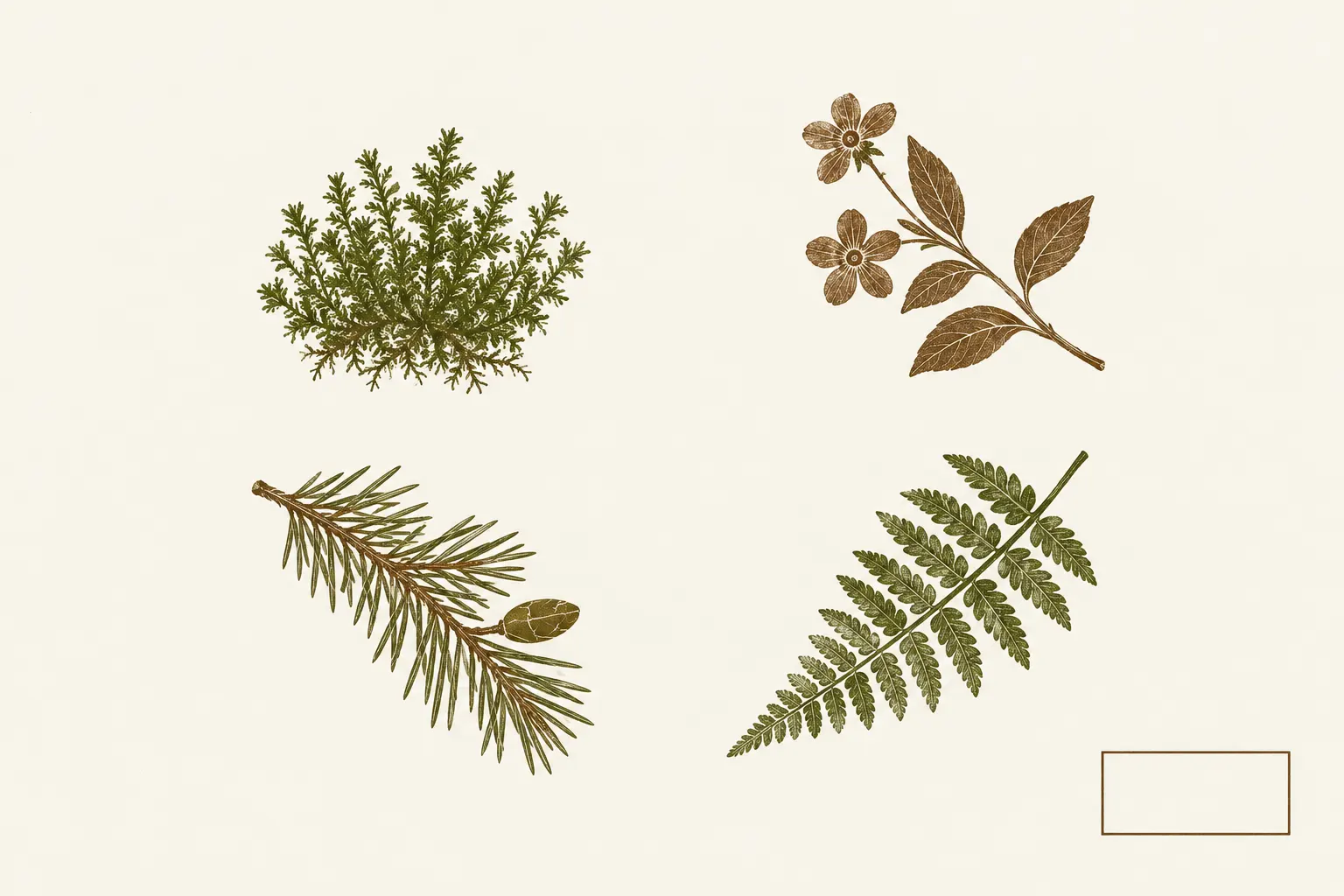
A pressed moss, flowering sprig, conifer sprig and fern frond: each belongs to a living group on the plant tree of life.
Illustration: Botany for the Curious. Generated schematic image — not a photograph or botanical record. Reuse terms: no license is granted; any rights Botany for the Curious holds in this image are reserved.Which were the first land plants? No living group was. In this hypothesis the oldest split among living land plants separates the bryophytes from the vascular plants, so every living land plant has had the same span of time since that ancestor.
APweb records that many earlier studies had liverworts branching off before all other land plants. The 1KP analyses and Puttick's team both rejected that arrangement, and Puttick's abstract says the results imply an ancestor of land plants more complex than that arrangement suggested.
Reading the bryophytes as a lower rung and the flowering plants as the top is the ladder mistake: a tree has branch points and no floors.
The pond algae next door
Of the algae on the tree, the stoneworts look most like land plants. Chara grows upright, with a whorl of branches at each node. APweb, the Angiosperm Phylogeny Website, recounts that stoneworts were often thought to be the closest relatives of land plants. Part of the reason was that they seemed halfway between simple algae and land plants.
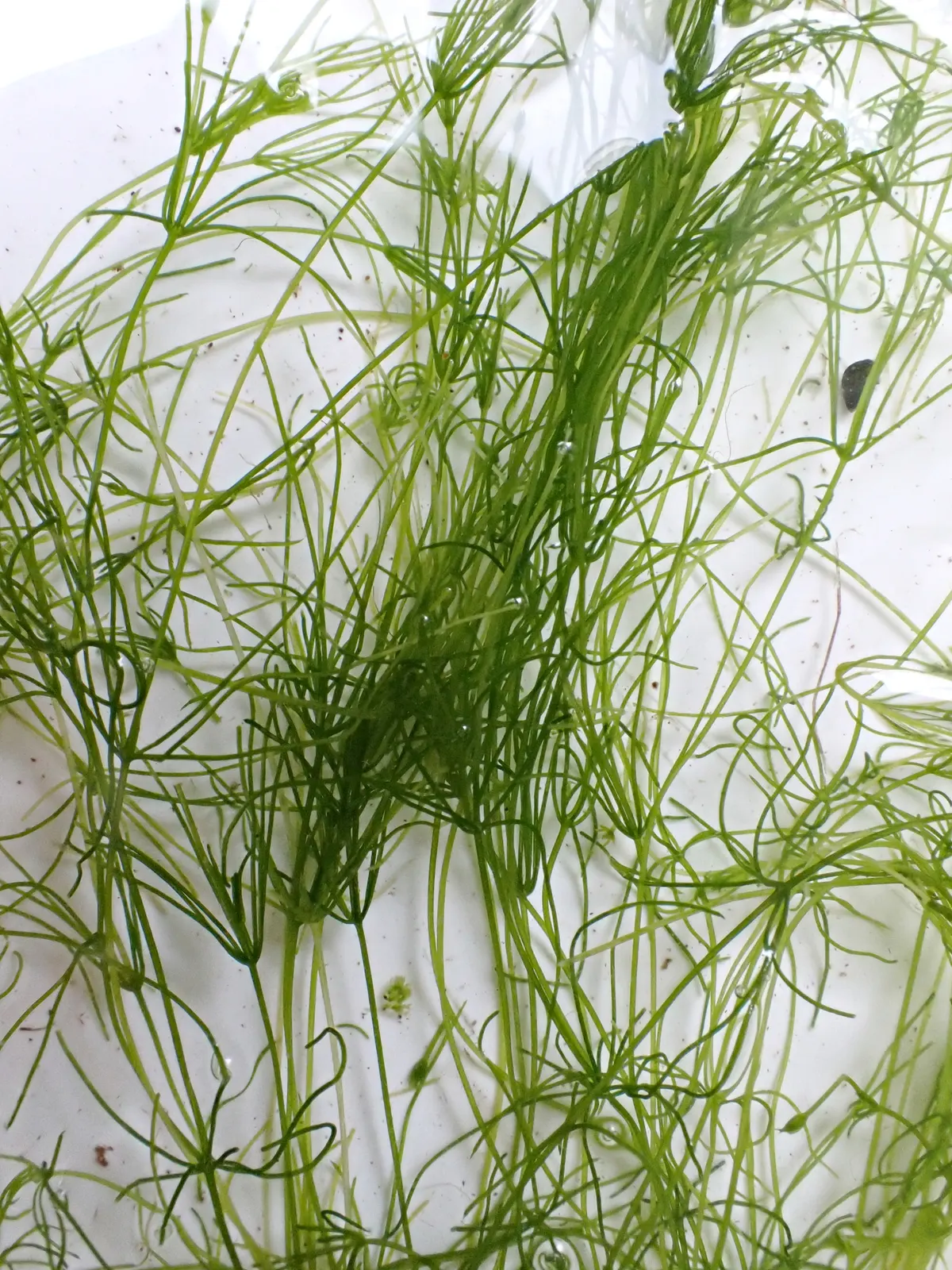
A stonewort, Chara globularis, from Lake Marakapia in the Chatham Islands, with a whorl of slender branches at each node of its stems.
"Chara globularis - Peter de Lange - 616991480" by Peter de Lange — https://commons.wikimedia.org/wiki/File:Chara_globularis_-_Peter_de_Lange_-_616991480.jpeg — CC0 1.0 (https://creativecommons.org/publicdomain/zero/1.0/)
Molecular evidence has pointed elsewhere for more than twenty years, APweb notes. In the 1KP tree the sister group of land plants is the conjugating algae: more than 4,000 described species of single cells and filaments, such as Closterium and Spirogyra. They reproduce sexually by conjugation, in which two cells fuse. English Wikipedia describes their body plan as simple, apparently after a loss of complexity.
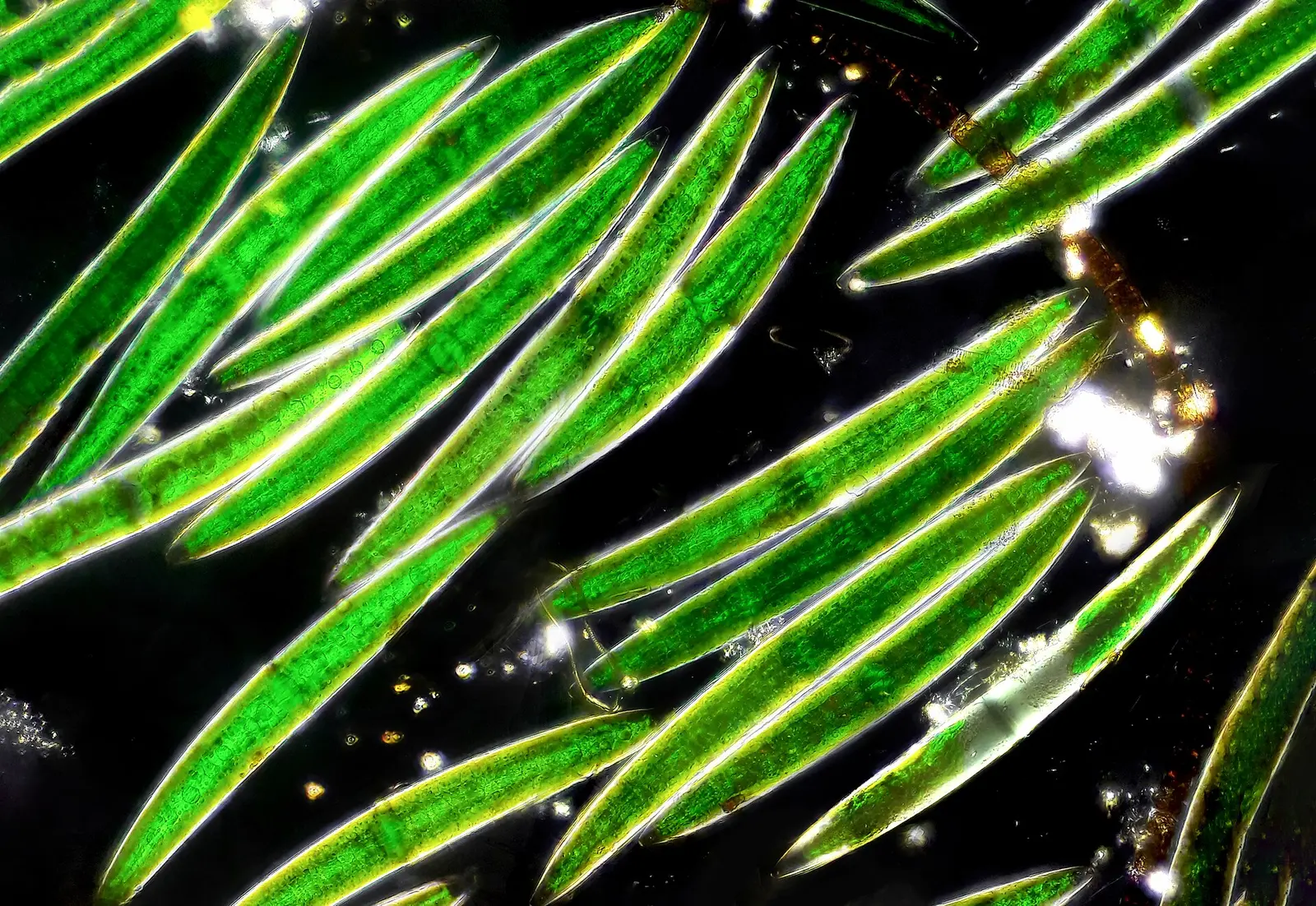
Crescent-shaped cells of Closterium, a conjugating alga, photographed under a microscope in polarised light.
"Водоросли Closterium в поляризованном свете" by Andrei Savitsky — https://commons.wikimedia.org/wiki/File:Водоросли_Closterium_в_поляризованном_свете.jpg — CC BY 4.0 (https://creativecommons.org/licenses/by/4.0/)
The branching just below them is less certain. The 1KP study could not rule out a near-simultaneous split of three lines: the conjugating algae, the Coleochaete group and the land plants. It also found similar support for pairing Coleochaete with the conjugating algae as the sister of land plants, and Fig. 1 draws that stretch dashed. Coleochaete grows as flat discs on surfaces in freshwater streams.
APweb also reports a 2025 study, built on morphology, anatomy, physiology and the presence of key genes, that placed the stoneworts next to land plants instead.
Liverworts, mosses, hornworts
Bryophytes are the three groups of land plants outside the vascular plants: liverworts, about 9,000 species in Christenhusz and Byng's count, mosses with 12,700 and hornworts with about 225. Some liverworts grow as a flat green body, a thallus. Marchantia carries small asexual buds, called gemmae, in cups on its upper surface.
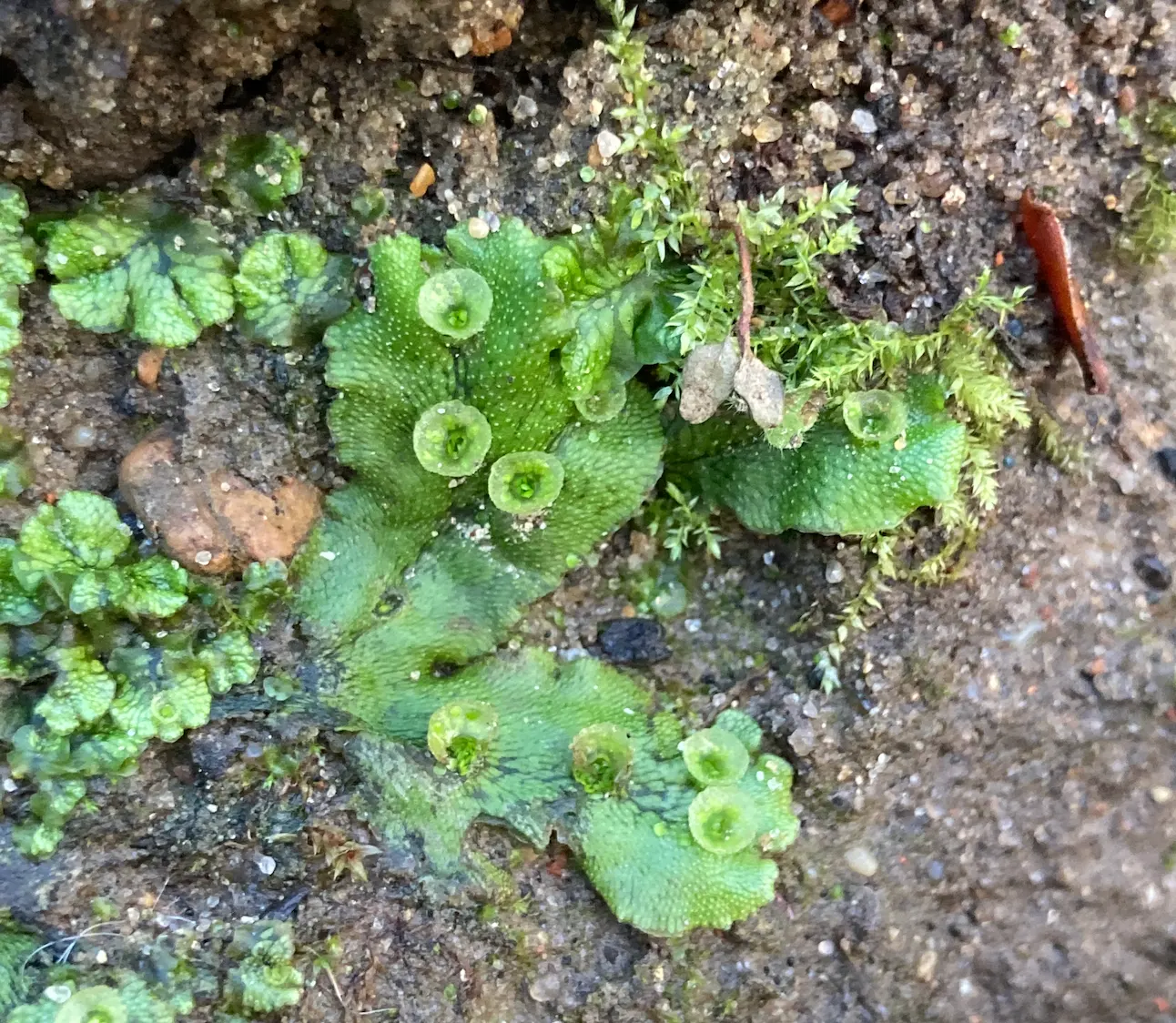
Flat green thalli of the liverwort Marchantia polymorpha, photographed in Moscow, with small cups on their upper surface that hold gemmae.
"Marchantia polymorpha" by Uier2 — https://commons.wikimedia.org/wiki/File:Marchantia_polymorpha.png — CC0 1.0 (https://creativecommons.org/publicdomain/zero/1.0/)
In the 1KP tree and its plastid analyses the three form one clade, an ancestor with all of its descendants, and hornworts are sister to a pairing of mosses and liverworts that Puttick's team calls Setaphyta. Other studies have recovered them as a grade, groups branching off one after another, and the Open Tree of Life synthesis 16.1 joins the hornworts to the vascular plants. Puttick's abstract narrows 15 possible arrangements to three that differ only in where the hornworts join, so Fig. 1 marks that branch point with a diamond.
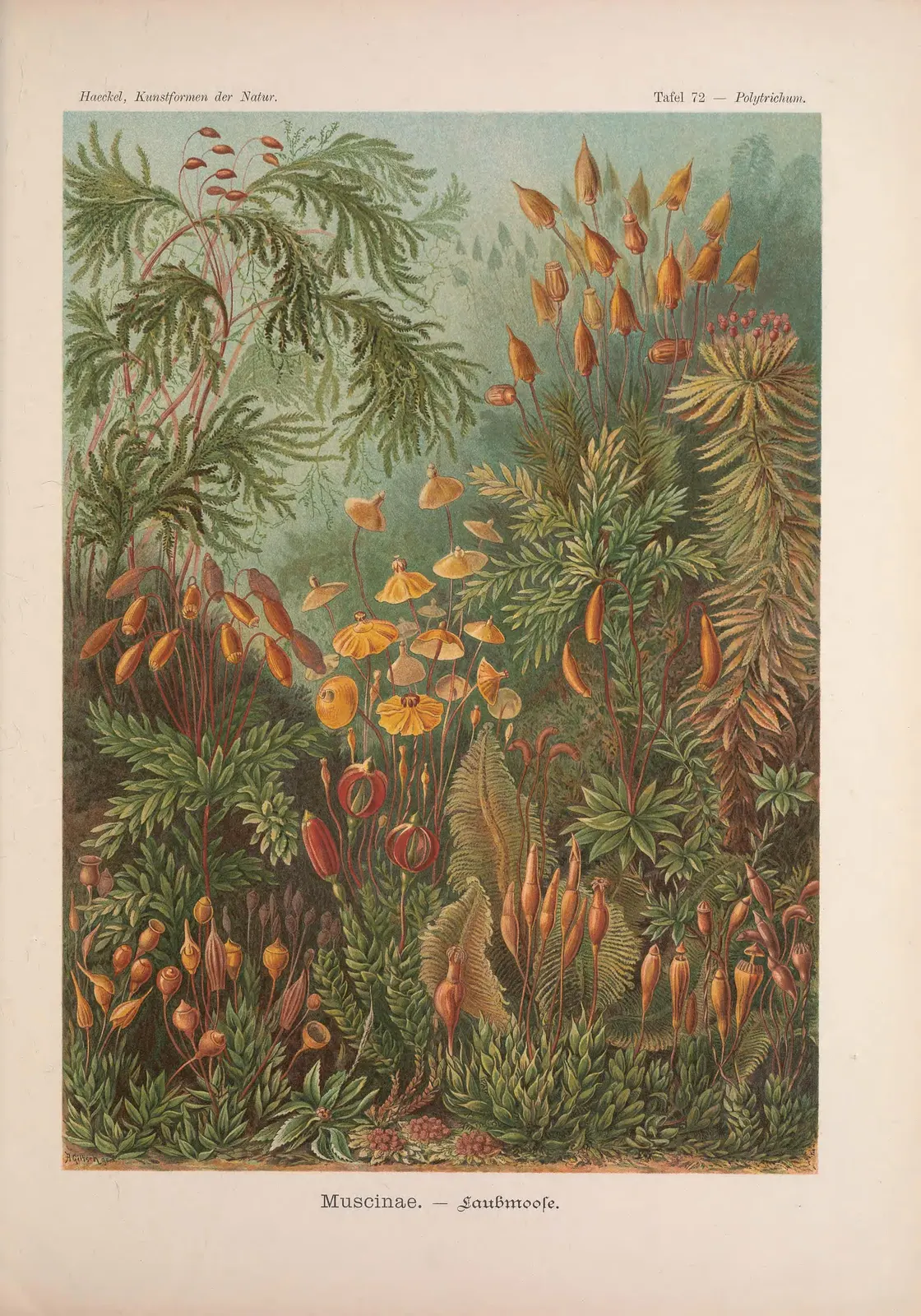
Mosses, many with stalked spore capsules, on plate 72 of Ernst Haeckel's "Kunstformen der Natur", published between 1899 and 1904; the plate is titled Muscinae.
Credit and licence
"Kunstformen der Natur (Tafel 72) BHL47388345" by Ernst Haeckel (Biodiversity Heritage Library) — https://commons.wikimedia.org/wiki/File:Kunstformen_der_Natur_(Tafel_72)_BHL47388345.jpg — Public domain (Ernst Haeckel d. 1919; Adolf Giltsch, the lithographer who turned many of Haeckel's drawings for the book into prints, d. 1911, and signed this plate "A. Giltsch gem."; published in "Kunstformen der Natur" between 1899 and 1904; US: published before 1931; EU: more than 70 years after both deaths; the Biodiversity Heritage Library scan is a faithful reproduction)
A hornwort's spore capsule rises from the flat body as a slender horn. The 1928 edition of Benjamin Daydon Jackson's glossary describes the capsule lengthening until it pierces a sheath grown up from that body.
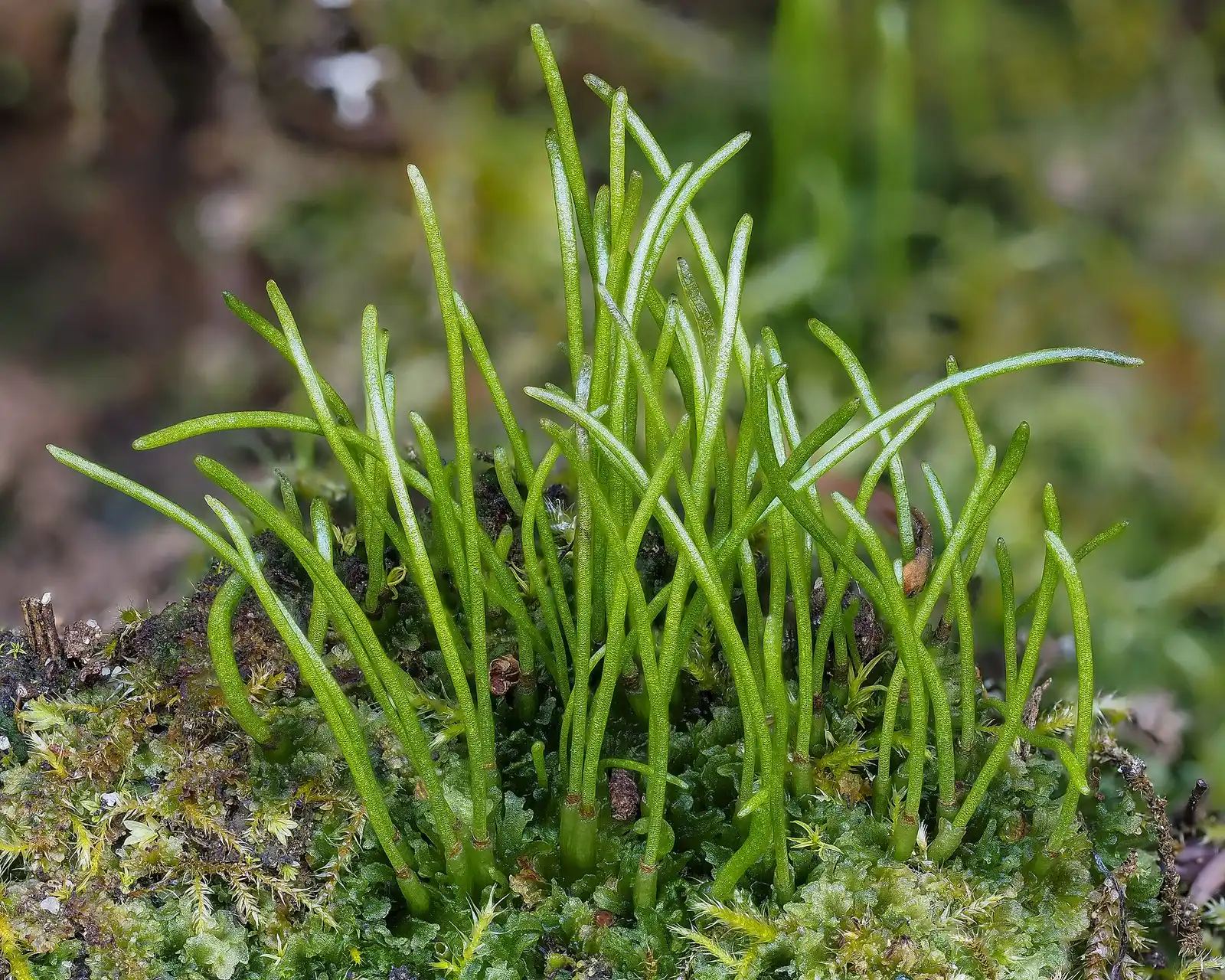
Upright green horns of the hornwort Anthoceros fusiformis, its spore capsules, on a soil bank on a coastal slope of Vancouver Island, British Columbia.
"Anthoceros fusiformis 2023" by Des Callaghan — https://commons.wikimedia.org/wiki/File:Anthoceros_fusiformis_2023.jpg — CC0 1.0 (https://creativecommons.org/publicdomain/zero/1.0/)
Lycophytes and ferns
Vascular plants have vascular tissue, one of the innovations the 1KP paper lists in the history of green plants. Their first split in the 1KP tree separates the lycophytes from the ferns and seed plants together, a pairing called Euphyllophyta. The lycophytes are the clubmosses, such as stag's-horn clubmoss, Lycopodium clavatum, and their relatives. Christenhusz and Byng counted 1,290 species of lycopods.
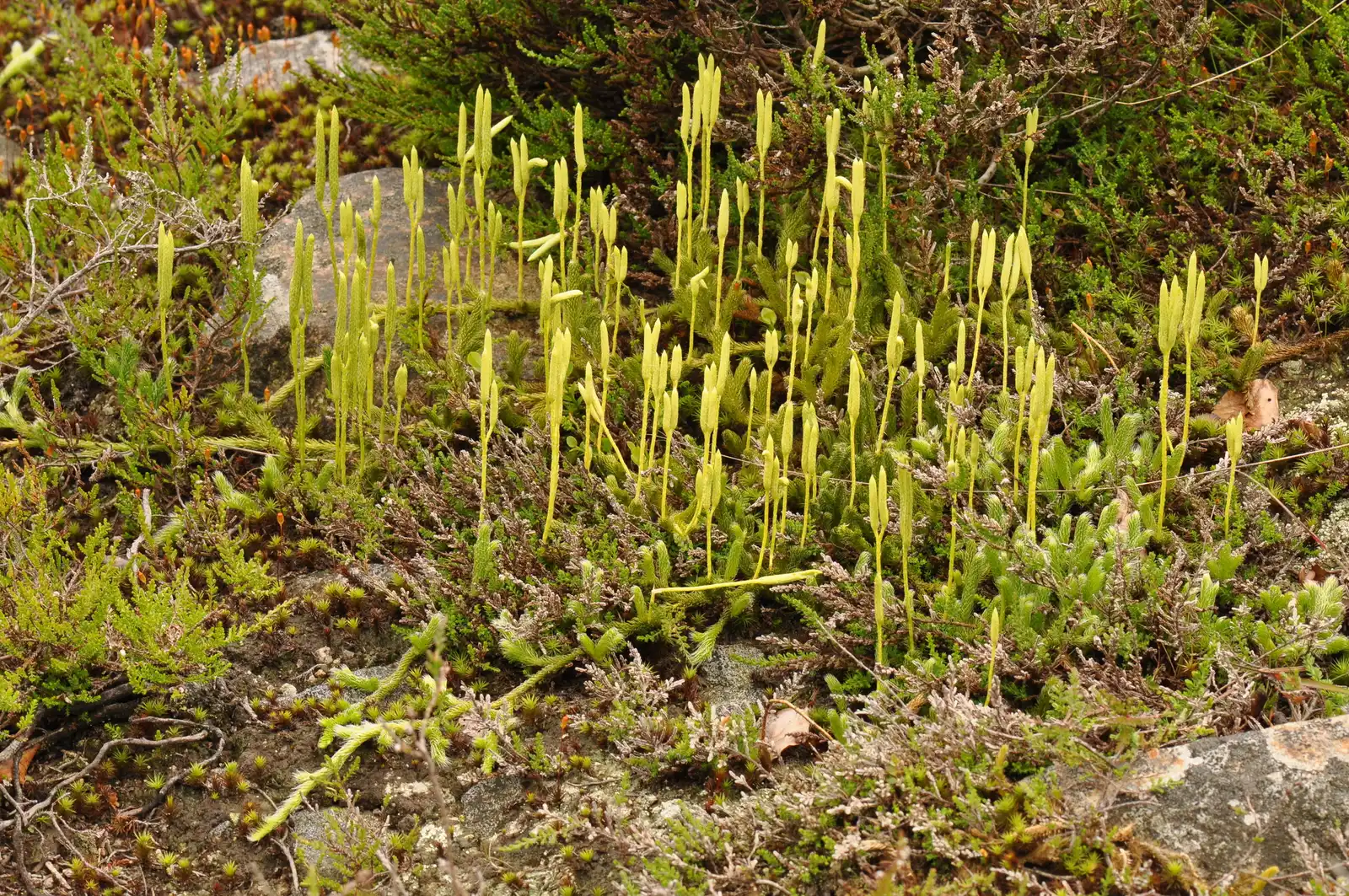
Stag's-horn clubmoss, Lycopodium clavatum, with pale upright spikes on stalks above its creeping leafy stems, photographed in north-eastern France.
"Lycopodium clavatum - Keulen-Bärlapp 171441363" by François-Xavier Taxil — https://commons.wikimedia.org/wiki/File:Lycopodium_clavatum_-_Keulen-Bärlapp_171441363.jpg — CC BY 4.0 (https://creativecommons.org/licenses/by/4.0/)
Ferns, 10,560 species in the same count, include the horsetails, Equisetum, which nuclear genes in the 1KP study place as sister to all other ferns. A fern's leaves are called fronds. PPG I, a community classification published in 2016, treats an estimated 11,916 species of lycophytes and ferns together.
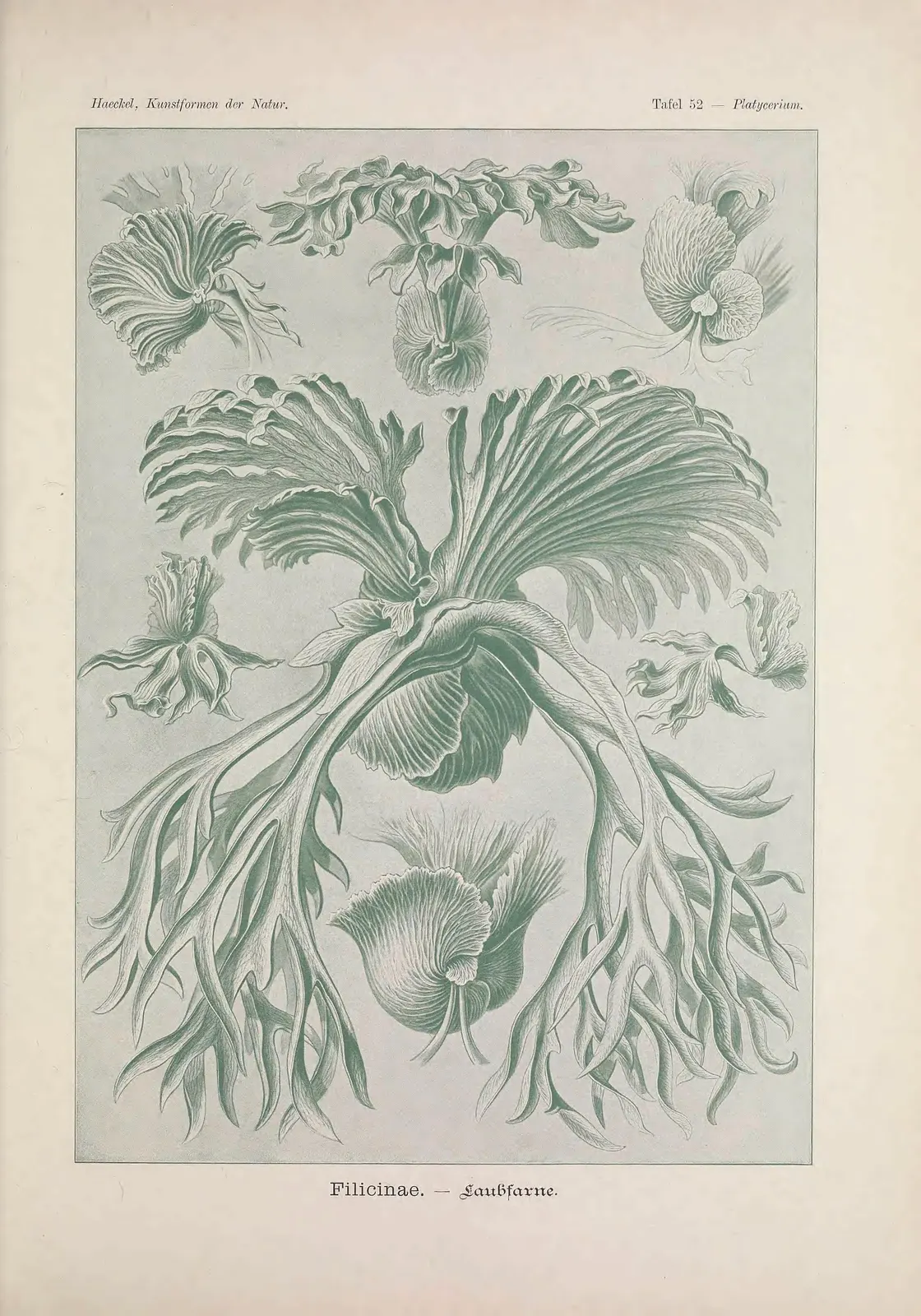
Ferns on plate 52 of Ernst Haeckel's "Kunstformen der Natur", published between 1899 and 1904; the plate is titled Filicinae, and its page header names the genus Platycerium.
Credit and licence
"Kunstformen der Natur (Tafel 52) BHL47388237" by Ernst Haeckel (Biodiversity Heritage Library) — https://commons.wikimedia.org/wiki/File:Kunstformen_der_Natur_(Tafel_52)_BHL47388237.jpg — Public domain (Ernst Haeckel d. 1919; Adolf Giltsch, the lithographer who turned many of Haeckel's drawings for the book into prints, d. 1911 (no lithographer signature is visible on this plate); published in "Kunstformen der Natur" between 1899 and 1904; US: published before 1931; EU: more than 70 years after both deaths; the Biodiversity Heritage Library scan is a faithful reproduction)
Seeds without flowers
Seed plants split into gymnosperms and flowering plants. Gymnosperms, approximately 1,000 living species in the 1KP paper and 1,079 in the 2016 count, have naked ovules: young seeds that are not enclosed in a carpel. In every 1KP analysis the cycads, such as Cycas revoluta, and Ginkgo form one branch, sister to the conifers and the gnetophytes.
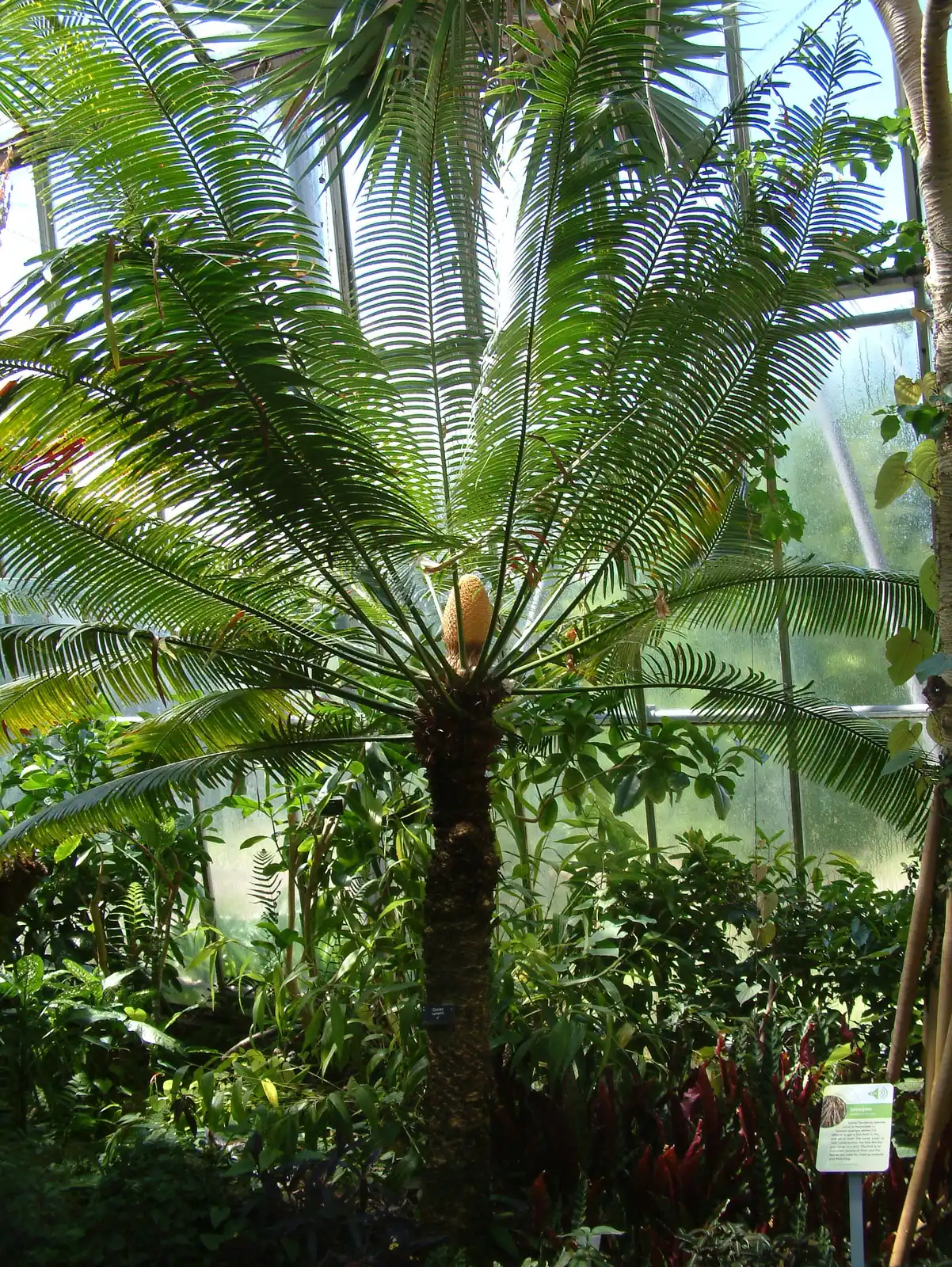
A large cone at the crown of a cycad, Cycas revoluta, grown under glass; the sign at lower right names a screwpine, not the cycad.
"Cycas revoluta (2944483828)" by Alex Lomas — https://commons.wikimedia.org/wiki/File:Cycas_revoluta_(2944483828).jpg — CC BY 2.0 (https://creativecommons.org/licenses/by/2.0/)
The gnetophytes, among them Welwitschia mirabilis from south-western Angola into Namibia, are the hardest gymnosperms to place. In the 1KP study, plastid genes put them beside one set of conifers, and two analyses of nuclear genes put them beside the pines or beside all conifers. APweb names their position as the main uncertainty among seed plants. Fig. 1 marks it with a diamond.
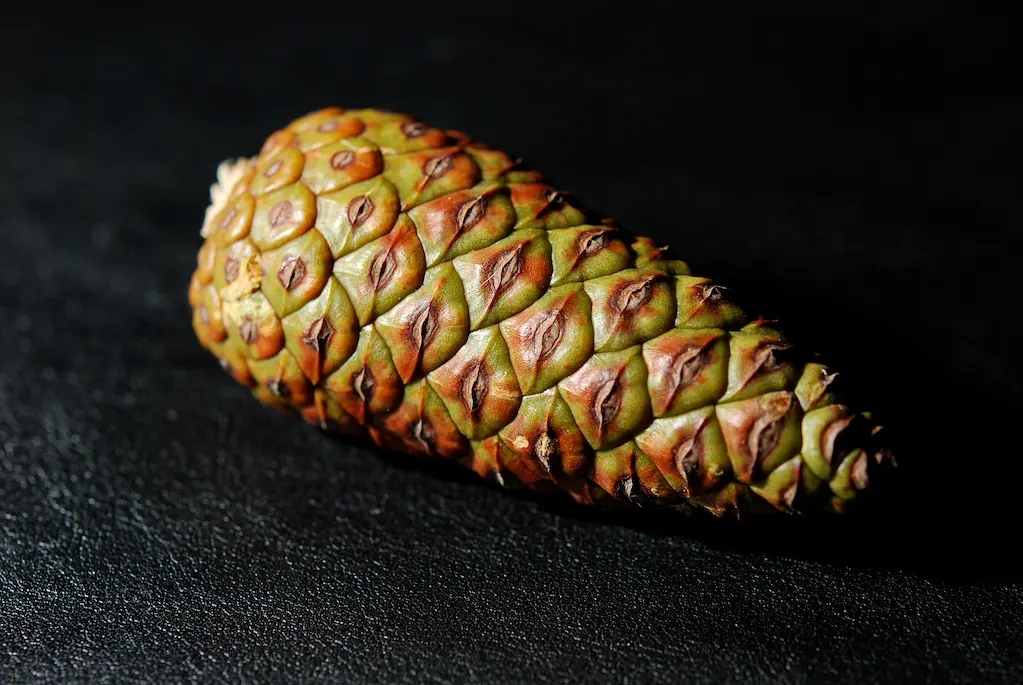
A pine cone with its woody scales packed in spiral rows; pines belong to the conifers.
"Math in Nature (3285831878)" by The Marmot — https://commons.wikimedia.org/wiki/File:Math_in_Nature_(3285831878).jpg — CC BY 2.0 (https://creativecommons.org/licenses/by/2.0/)
Flowering plants
Flowering plants are by far the largest branch: 295,383 species in the 2016 count, and more than 370,000 in the figure the 1KP paper cites. Among their innovations the 1KP paper lists double fertilisation and endosperm, vessel elements in most species, and the carpel, a structure that answers to a single leaf and encloses the ovules.
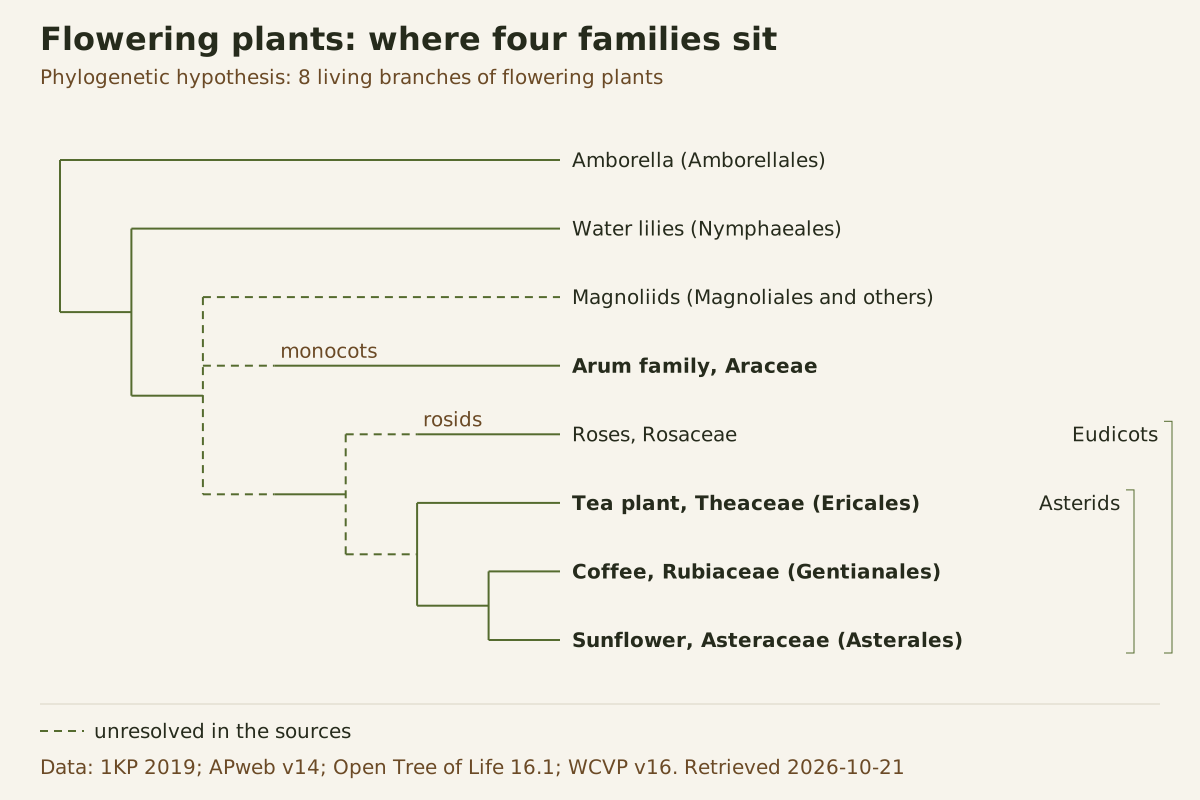
Fig. 2. A phylogenetic hypothesis for eight living branches of flowering plants, with the arum, tea, coffee and daisy families in bold; dashed lines are unresolved.
"Flowering plants: where four families sit" by Botany for the Curious, https://botanyforthecurious.com/trees/plant-tree-of-life/, licensed under CC BY 4.0 (https://creativecommons.org/licenses/by/4.0/)data: One Thousand Plant Transcriptomes Initiative 2019, Nature 574: 679 (CC BY 4.0), retrieved 2026-10-21; APweb version 14 (P. F. Stevens), relationships summarised, retrieved 2026-10-21; Open Tree of Life synthetic tree v16.1 (CC0), https://doi.org/10.5281/zenodo.3937741, with Open Tree Taxonomy 3.7 (draft 3) (CC0), https://doi.org/10.5281/zenodo.3937750, retrieved 2026-10-21; WCVP (Kew), CC BY 3.0, doi:10.34885/egs6-cp24, retrieved 2026-10-21; World Flora Online Plant List 2026-06 (CC0), retrieved 2026-10-21One branch holds only the Amborellales: Amborella trichopoda, a scrambling shrub or tree of New Caledonia. In the 1KP tree, Amborellales, then the water lilies, then Austrobaileyales split off in turn from all other flowering plants. On that tree, the Amborella line is the sister of every other flowering plant; Ladder of Progress explains why that does not make it their ancestor.
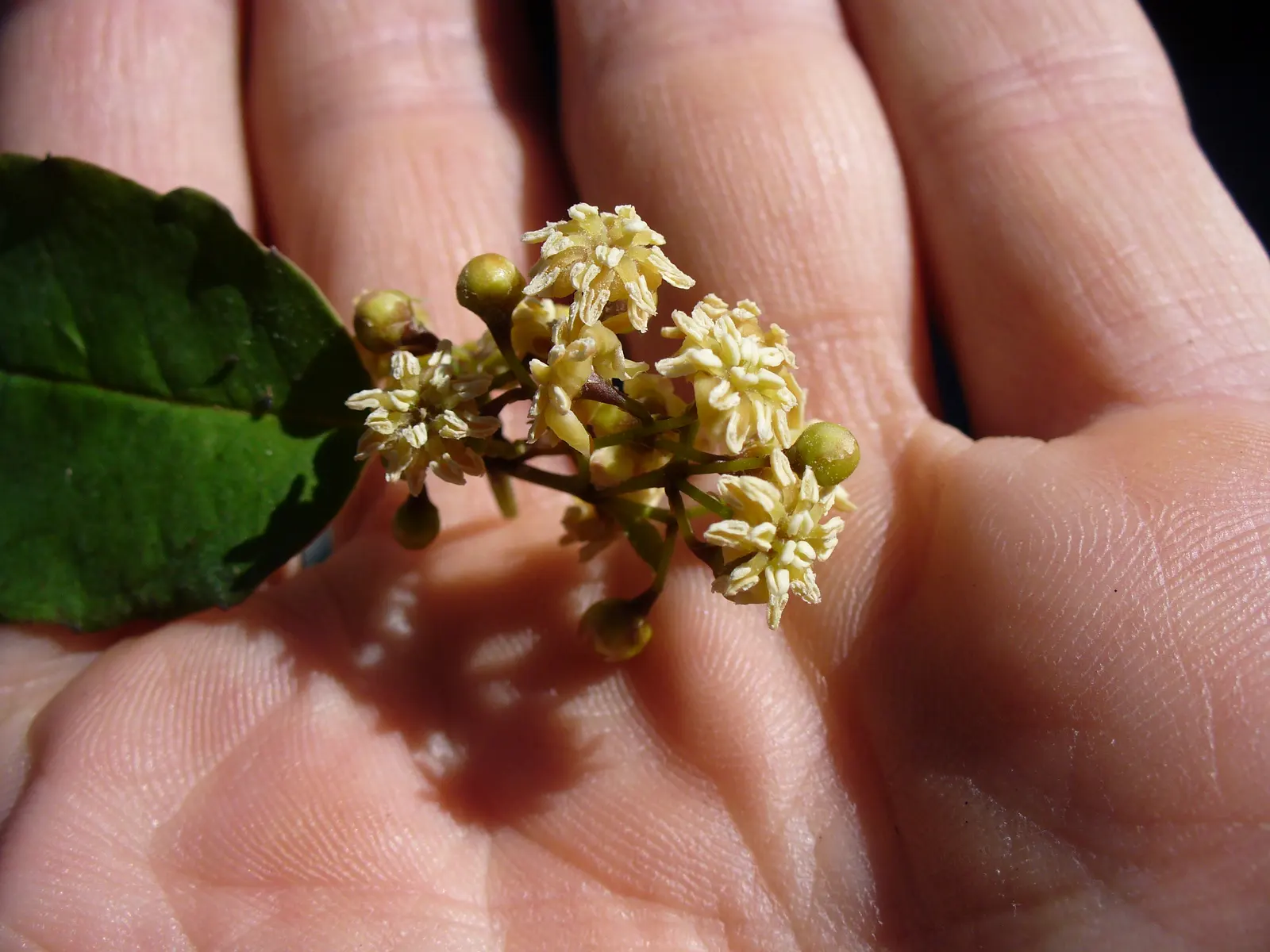
Small cream flowers of Amborella trichopoda, held in a palm, from a plant grown at the Wertheim Conservatory, Florida International University, Miami.
"Amborella trichopoda (3065965956)" by Scott Zona — https://commons.wikimedia.org/wiki/File:Amborella_trichopoda_(3065965956).jpg — CC BY 2.0 (https://creativecommons.org/licenses/by/2.0/)
Above them, the magnoliids, the monocots and the eudicots split in an order the sources do not agree on. APweb sets out three recent arrangements, from APG IV in 2016 to two studies of 2024, that cannot all be right. Fig. 2 draws that split dashed. The Open Tree of Life synthesis 16.1 groups the monocots with the magnoliids, and in it neither the monocots nor the eudicots come out as a single branch, as they do in Fig. 2.
The monocots, 74,273 species in the 2016 count, include the arum family, Araceae, home of the titan arum, Amorphophallus titanum, with its large unbranched inflorescence (inflorescence types). The eudicots, 210,008 species, hold the other families in Fig. 2.
The tea plant, Camellia sinensis (Theaceae, order Ericales), sits on the asterid branch. It is sister to a pair of lines: one holds coffee, Coffea arabica (Rubiaceae, Gentianales), and the other the daisy family, Asteraceae, with the sunflower, Helianthus annuus. Types of Tea and Caffeine follow these two plants further.
In Fig. 2 the daisy family joins the tree at a branch point, like every other tip, and sits at the end of one line rather than on a top rung. The sunflower's line and the coffee line have evolved for the same span of time since they split.
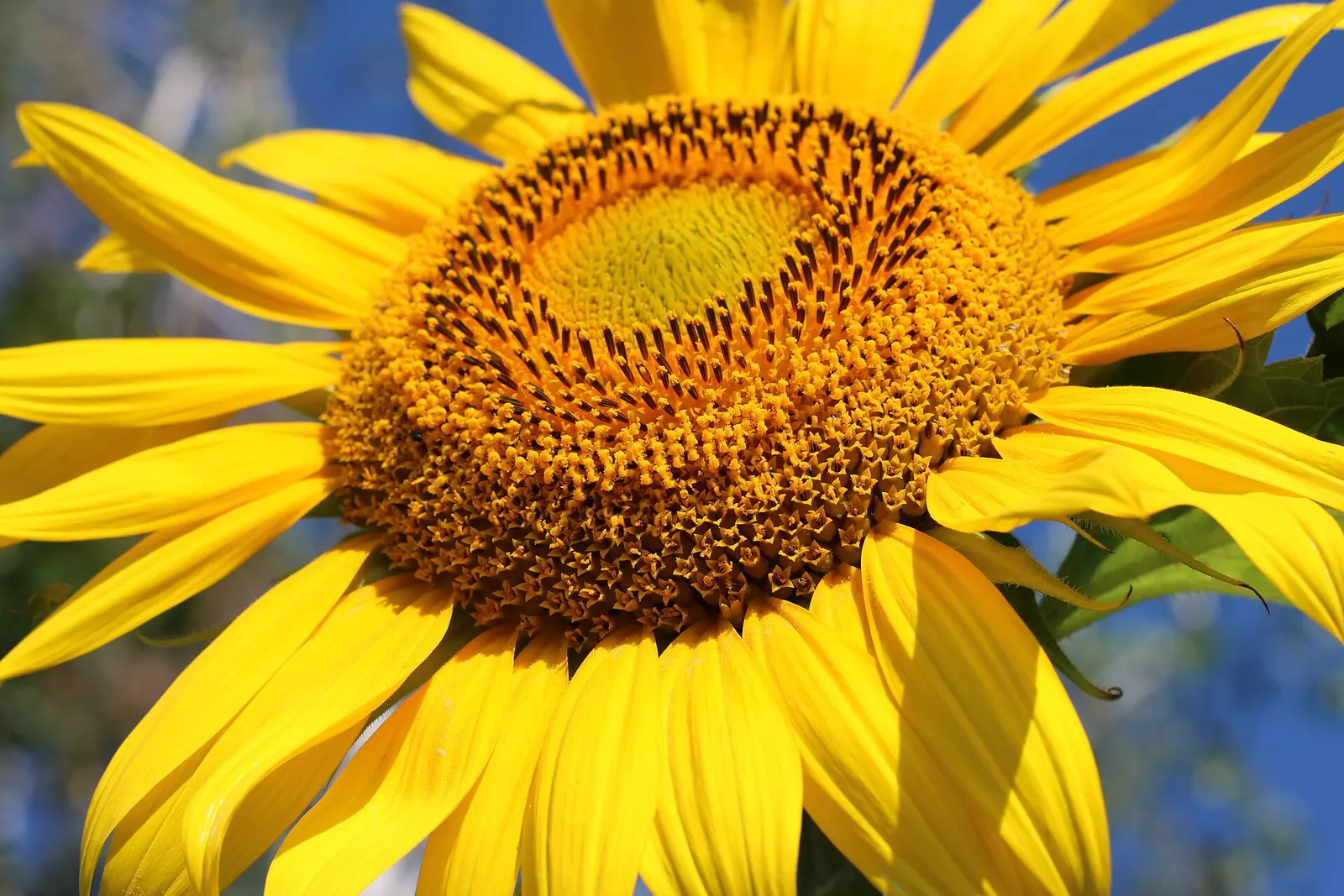
A sunflower head, Helianthus annuus, photographed in the Vinnytsia district of Ukraine; the sunflower belongs to the daisy family, Asteraceae.
"Sunflower head 2026 G1" by George Chernilevsky — https://commons.wikimedia.org/wiki/File:Sunflower_head_2026_G1.jpg — CC BY 4.0 (https://creativecommons.org/licenses/by/4.0/)
Sources
- One Thousand Plant Transcriptomes Initiative (2019). "One thousand plant transcriptomes and the phylogenomics of green plants." Nature 574(7780): 679–685. doi:10.1038/s41586-019-1693-2. https://doi.org/10.1038/s41586-019-1693-2 full text Text licence: CC BY 4.0
- Puttick, M. N., Morris, J. L., Williams, T. A., Cox, C. J., Edwards, D., Kenrick, P., Pressel, S., Wellman, C. H., Schneider, H., Pisani, D. & Donoghue, P. C. J. (2018). "The interrelationships of land plants and the nature of the ancestral embryophyte." Current Biology 28(5): 733–745.e2. doi:10.1016/j.cub.2018.01.063. https://doi.org/10.1016/j.cub.2018.01.063 abstract
- Christenhusz, M. J. M. & Byng, J. W. (2016). "The number of known plants species in the world and its annual increase." Phytotaxa 261(3): 201–217. doi:10.11646/phytotaxa.261.3.1. https://doi.org/10.11646/phytotaxa.261.3.1 abstract
- The Pteridophyte Phylogeny Group (2016). "A community-derived classification for extant lycophytes and ferns." Journal of Systematics and Evolution 54(6): 563–603. doi:10.1111/jse.12229. https://doi.org/10.1111/jse.12229 abstract
- Stevens, P. F. (2001 onwards). Angiosperm Phylogeny Website. Version 14, July 2017 [and more or less continuously updated since]. http://www.mobot.org/MOBOT/research/APweb/ pages for embryophytes and spore plants, seed plants and gymnosperms, Gnetales, angiosperms, monocots, Alismatales, Nymphaeales, Magnoliales, eudicots, asterids, euasterids, Asterales and Gentianales, read 2026-10-21
- The Angiosperm Phylogeny Group (2016). "An update of the Angiosperm Phylogeny Group classification for the orders and families of flowering plants: APG IV." Botanical Journal of the Linnean Society 181(1): 1–20. doi:10.1111/boj.12385. https://doi.org/10.1111/boj.12385 bibliographic record only
- OpenTree et al. "Open Tree of Life Synthetic Tree", release opentree16.1 (built 2025-12-20), with Open Tree Taxonomy 3.7 (draft 3) identifiers (CC0). doi:10.5281/zenodo.3937741; taxonomy doi:10.5281/zenodo.3937750. https://doi.org/10.5281/zenodo.3937741 subtree, branch-point support and conflict, and source-tree records for the taxa of this page
- Govaerts, R. (ed.) (2026). WCVP: World Checklist of Vascular Plants, version 16. Facilitated by the Royal Botanic Gardens, Kew. doi:10.34885/egs6-cp24. Retrieved 2026-10-21. https://doi.org/10.34885/egs6-cp24 records for the vascular representative species of this page Text licence: CC BY 3.0
- World Flora Online Plant List, classification 2026-06 (CC0). Retrieved 2026-10-21. https://list.worldfloraonline.org/ name records for ten representative taxa
- Jackson, B. D. (1928). A Glossary of Botanic Terms with Their Derivation and Accent, 4th edition, revised and enlarged. London: Gerald Duckworth; New York: Hafner Publishing. Reprinted January 1953. https://archive.org/details/glossaryofbotani1928jack 4th edition (1953 reprint): entries for capsule (p. 63), carpel (p. 65), cone (p. 88), conjugation (p. 89), frond (p. 152), gemma (p. 157), Gymnospermae and gymnospermous (pp. 167–168), involucre (p. 202), ovary and ovule (p. 261) and sporogonium (p. 358)
- English Wikipedia, "Zygnematophyceae" (read 2026-10-21). https://en.wikipedia.org/wiki/Zygnematophyceae summarised here through English Wikipedia
- English Wikipedia, "Charophyceae" (read 2026-10-21). https://en.wikipedia.org/wiki/Charophyceae summarised here through English Wikipedia
- English Wikipedia, "Coleochaete" (read 2026-10-21). https://en.wikipedia.org/wiki/Coleochaete summarised here through English Wikipedia
- English Wikipedia, "Araceae" (read 2026-10-21). https://en.wikipedia.org/wiki/Araceae summarised here through English Wikipedia
- English Wikipedia, "Amorphophallus titanum" (read 2026-10-21). https://en.wikipedia.org/wiki/Amorphophallus_titanum summarised here through English Wikipedia
- English Wikipedia, "Camellia sinensis" (read 2026-10-21). https://en.wikipedia.org/wiki/Camellia_sinensis summarised here through English Wikipedia
- English Wikipedia, "Coffea arabica" (read 2026-10-21). https://en.wikipedia.org/wiki/Coffea_arabica summarised here through English Wikipedia
- English Wikipedia, "Asteraceae" (read 2026-10-21). https://en.wikipedia.org/wiki/Asteraceae summarised here through English Wikipedia
Related
- Ladder of Progress: Mosses Have Evolved as Long as Roses Deep explainer
- How to Read a Phylogenetic Tree: Tip Order Means Nothing Comparison and chart
Cite this page
Botany for the Curious. “Plant Tree of Life: Land Plants' Closest Kin Are Pond Algae.” Published 2026-10-22; last substantive revision 2026-10-22. https://botanyforthecurious.com/trees/plant-tree-of-life/ (accessed: add the date you read it).
- Published
- Last substantive revision